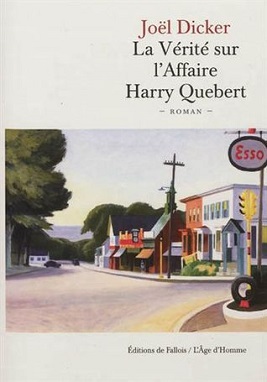
Decoding The Truth About The Harry Quebert Affair's Twists
Few literary thrillers captivate with such intricate web-spinning as Joël Dicker's international phenomenon, *The Truth About The Harry Quebert Affair*. What begins as a seemingly straightforward murder investigation quickly morphs into a multi-layered journey through time, memory, love, and the very nature of storytelling itself. For readers and viewers alike, the quest to uncover *The Truth About The Harry Quebert Affair* is an addictive pursuit, promising twists and turns that challenge every assumption. This article dives deep into the heart of its mystery, exploring the narrative genius that keeps audiences guessing until the very last page.
The Unfolding Scandal: A Mentor Accused
At its core, *The Truth About The Harry Quebert Affair* introduces us to Marcus Goldman, a young author struggling with the daunting weight of writer's block after his debut success. His publisher is breathing down his neck, and creative inspiration seems a distant memory. In desperation, Marcus seeks solace and guidance from his former college English professor and celebrated mentor, Harry Quebert, author of the revered American classic, *The Origin of Evil*. Harry lives a secluded life in a picturesque beach house in the quaint community of Somerset, Maine.
However, this idyllic retreat is shattered when a shocking discovery is made. During routine garden work, the skeletal remains of Nola Kellergan, a 15-year-old girl who vanished without a trace in 1975, are unearthed in Harry's backyard. Buried alongside her is the original manuscript of *The Origin of Evil*. The evidence is damning. Harry Quebert, the beloved literary figure, is immediately arrested, accused of Nola's murder, and faces the very real threat of the death penalty.
The scandal sends shockwaves through the quiet town and the literary world. Compounding Harry's predicament is the revelation of his secret romantic involvement with Nola, a controversial relationship given his age of 34 at the time of her disappearance. Despite the seemingly insurmountable evidence, Marcus is convinced of his mentor's innocence. Driven by loyalty, a desperate need for a story, and a belief in Harry, Marcus embarks on his own investigation, determined to uncover *The Truth About The Harry Quebert Affair*. His quest for justice becomes the very book he needs to write, blurring the lines between investigation and creation, between reality and narrative.
A Labyrinthine Journey Through Time and Perspectives
One of the most compelling aspects of *The Truth About The Harry Quebert Affair* is its sophisticated narrative architecture. Dicker masterfully employs a "story within a story" structure, with Marcus Goldman's real-time investigation in 2008 simultaneously becoming the subject matter of his new book, also titled *The Truth About The Harry Quebert Affair*. This meta-narrative approach allows readers to experience the unfolding mystery through Marcus's eyes, witnessing his frustrations, breakthroughs, and evolving understanding of the events.
The timeline itself is a dynamic character, constantly shifting back and forth between three distinct periods:
* **2008:** The present-day investigation led by Marcus, as he interviews witnesses, analyzes clues, and pieces together the puzzle.
* **1975:** The fateful summer in Somerset, Maine, leading up to Nola Kellergan's disappearance, revealing the town's secrets and the complex relationships between its residents.
* **Marcus's Own Life:** Glimpses into his past struggles with writing, his relationship with Harry, and his personal journey towards becoming a successful author.
This non-linear storytelling is not merely a stylistic choice; it's fundamental to the novel's intricate plotting. Each jump in time peels back another layer of deception, introducing new suspects, motives, and red herrings. Just when the truth seems within grasp, a new revelation "muddies the waters once again," forcing both Marcus and the reader to re-evaluate everything they thought they knew. This constant re-calibration of facts ensures that the narrative remains fresh, engaging, and utterly unpredictable. For a deeper dive into how this complex structure contributes to the suspense, you might want to read
Unraveling The Truth About The Harry Quebert Affair's Mystery.
Beyond the Whodunnit: Themes of Love, Art, and Illusions
While the core mystery of Nola Kellergan's murder provides the driving force, *The Truth About The Harry Quebert Affair* transcends the typical crime thriller by weaving in profound explorations of universal themes.
*
The Nature of Love: The controversial romance between Harry and Nola is central, but the novel also examines other forms of love—obsessive, unrequited, paternal, and fraternal. It delves into the sacrifices made for love and the devastating consequences of secrets held in its name.
*
The Relationship Between Writing and Life: A significant thread explores how an author's life experiences, memories, and even lies can become the fabric of their fiction. Harry's masterpiece, *The Origin of Evil*, is intrinsically linked to Nola, raising questions about inspiration, exploitation, and the blurring boundaries between reality and art. Marcus's journey to write his own book about Harry mirrors this thematic exploration, transforming his investigation into an act of creation.
*
Mentorship and Legacy: The dynamic between Marcus and Harry is pivotal. Harry is not just a suspect; he is Marcus's intellectual father, who taught him "the discipline and focus necessary to becoming a writer." As Marcus investigates, he not only seeks justice for Harry but also grapples with his own identity and destiny, ultimately needing to "make some hard decisions and become his own man."
*
The Elusiveness of Truth: The title itself is a provocative statement. The narrative consistently demonstrates that "truth" is often subjective, shaped by perspective, memory, and the narratives we construct. Every character holds a piece of the puzzle, but also their own biases and secrets, making a definitive, singular truth agonizingly difficult to grasp.
Memorable characters like Tamara Quinn, the sharp-tongued diner owner with her own designs, and Luther Caleb, the kind-hearted chauffeur scarred by a brutal beating, contribute significantly to these themes. Nola herself, initially seen as a mysterious muse, reveals layers of her own complexities and hidden demons, proving that no one in Somerset is quite who they seem. For a more detailed examination of these deeper layers, explore
The Harry Quebert Affair: A Deep Dive into Love, Writing, & Lies.
The Art of Misdirection: A Satisfying and Unforgettable Conclusion
One of the most frequently lauded aspects of *The Truth About The Harry Quebert Affair* is its utterly unpredictable ending. Many readers attest to feeling confident they had "figured it out half-way through," only to have their theories utterly dismantled by subsequent revelations. The novel is a masterclass in misdirection, continually presenting new evidence and shifting perspectives that lead the reader down multiple plausible, yet ultimately incorrect, paths.
Dicker's genius lies in his ability to create such a dense, interconnected web of characters and events that almost anyone could be the culprit. Motives are plentiful, and opportunities abound. This constant re-evaluation of suspects—from Harry himself to various townspeople with their own secrets—keeps the tension ratcheted high until the very end. The final reveal is not just a single twist, but a cascade of revelations that recontextualize everything that came before, offering an ending that is both shocking and, in retrospect, entirely satisfactory. It's a testament to the author's meticulous plotting that all the pieces, no matter how convoluted, ultimately snap into place, leaving the reader with a profound sense of having been skillfully played—and thoroughly entertained.
Conclusion
*The Truth About The Harry Quebert Affair* stands as a monumental achievement in contemporary thriller fiction. Its blend of a compelling murder mystery, intricate narrative structure, rich thematic depth, and a truly unpredictable ending ensures its place as a book that continues to spark conversation and admiration. Whether you're drawn in by the dark secrets of a small town, the complexities of a forbidden love, or the fascinating interplay between an author's life and his art, this novel delivers an immersive and unforgettable experience. It reminds us that truth is often more elusive and surprising than fiction, and the journey to uncover it is its own profound reward.